

We bring glass to life.
We showcase its diversity—its history, production, processing, and uses.
We let children and teenagers explore glass as a material on their own through interactive glass activity stations.
We see ourselves as a platform for education, research, and business.
We invite you to experience glass with all your senses—from marveling at it to trying it out for yourself.
The GLASMUSEUM WERTHEIM traces its origins to an initiative by the glass physicist and glass entrepreneur Dr. Hans Löber (1900–1978) from Thuringia. Together with a group of Thuringian glass experts who settled in Wertheim after 1945, he founded the “Glaswerk Wertheim” in 1950 (1950–1993; today: DWK Life Sciences GmbH (DURAN-WHEATON-KIMBLE)), thereby laying the foundation for the laboratory glass industry based in Wertheim. In 1973, he joined forces with members of the Wertheim laboratory glass industry to form the Wertheimer Glasmuseum e. V. (today: GLASMUSEUM WERTHEIM e. V.).
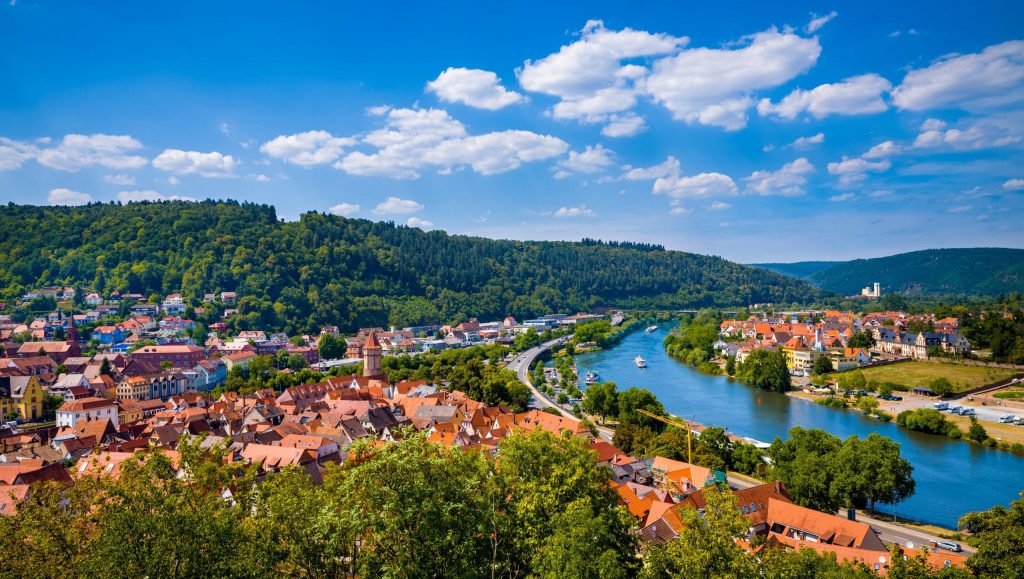
Today, Wertheim is the second-largest center of the German laboratory glass industry after Mainz.
This development began around 1950 with the construction of a glassworks. Five glass entrepreneurs from Thuringia thus secured their source of raw materials: Rudolf Brand, Dr. Fritz Friedrichs, Josef Friedrichs, Dr. Hans Löber, and Carl Zitzmann. In April 1950, they melted the first batch of glass at the newly founded“Glaswerk Wertheim.”This marked the launch of the“Glasindustrie Wertheim”project by the city of Wertheim. Among the first companies to process Wertheim glass on Wertheim soil were Alfi, Amarell, Brand, Graf, Helios, Normschliff, and Schneider. Shortly thereafter, “Glaswerk Wertheim” was supplying around 100 glass-processing companies with raw glass and semi-finished products. In the 1970s, approximately 3,000 people worked here; today, the number is about 1,700.
In 1972, the second glass melting facility was established in Wertheim. “Glaswerk Schuller,” now Johns Manville, had already set up operations in Wertheim in 1952 to produce glass fiber products. Glass fiber products are also commonly known as “glass wool.” Today, Johns Manville operates its own plant with two 60-ton furnaces.
And in 1973 at the latest, it became clear that "industry creates culture": at that time, the first managing director of the glassworks, the glass physicist Dr. Hans Löber, decided to present the versatility of glass as a material to the public. He founded an association to open the Wertheim Glass Museum in 1976!
The "Wertheim glassworks", now owned by DWK Life Sciences Mainz, was closed in 1994. From the last glass melting plant, glass designers from Wertheim melted glass blocks in cooperation with the glass museum and industry and built the glass pyramid at the Mainpark.
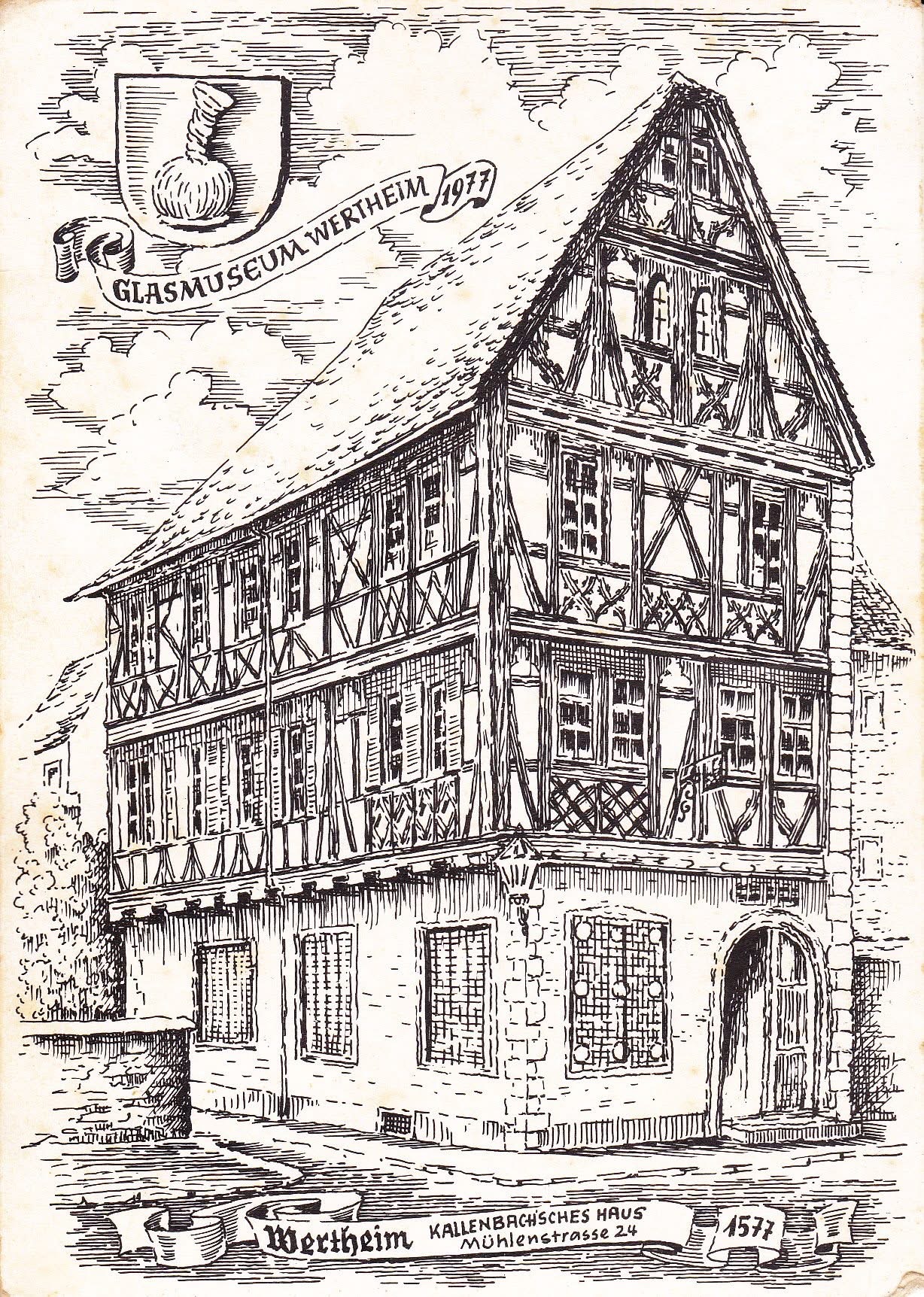
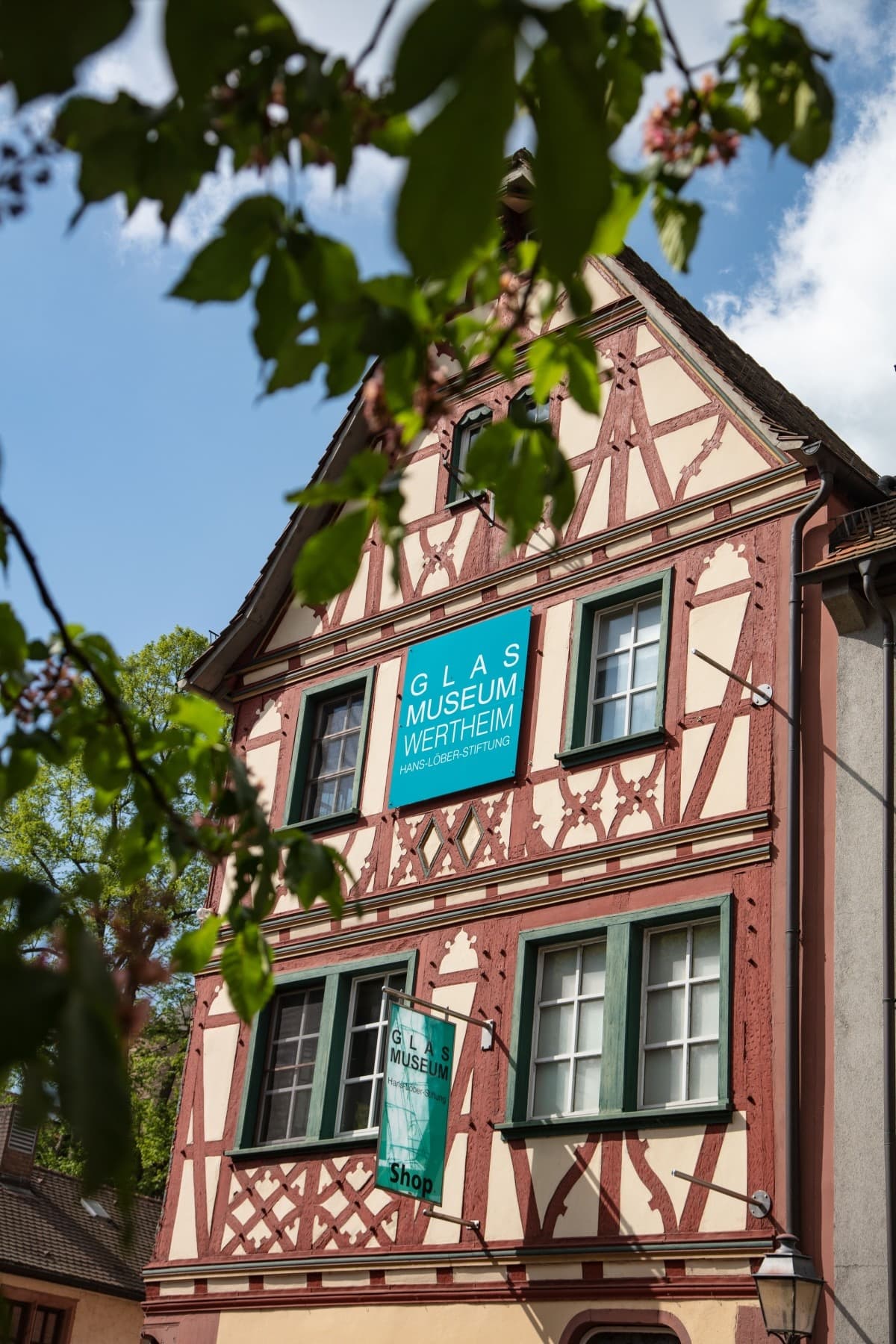
In 1972, the city of Wertheim acquired the Löwenstein-Rosenberg estate, including the associated “Kallenbach House.” Dr. Hans Löber (1900–1978) then persuaded the mayor at the time, Karl Josef Scheuermann, to make this half-timbered house, dating from 1577, available for use as the Glass Museum. The house, known as the “Großes Haus,” had to be completely renovated. Dr. Hans Löber found an ally in Hermann Thees, who supported him with advice and, above all, hands-on help. Thees was also an entrepreneur in “retirement.”
On 29 May 1976, the GLASMUSEUM WERTHEIM was opened with an exhibition area of 400 square metres. The diversity of the material glass could be shown on three floors.
Following the death of Dr. Hans Löber (1900–1978), his daughter Gertrud Löber took over as director of the museum and became the first chairperson of the Förderkreis Wertheimer Glasmuseum e. V.
Marianne Tazlari is becoming the museum director.
In 1996, the town of Wertheim made a second half-timbered house from 1588 with an exhibition area of 250 square metres available to the Förderkreis. This house, also a listed building, called the "Little House", was restored by the city, the state, the Förderkreis and the district from 1996 to 1997.
In 1998, the “Kleine Haus” opened its doors, featuring in-depth explorations of specific glass-related themes across two floors: rotating exhibitions, the “Glass Bead Cabinet” (since 1998, a collection by Mainz-based scholar Thea E. Haevernik, 1899–1982), and the “Scientific Glass Cabinet” (since 2012). Wolfgang Schuller becomes the first chairman of GLASMUSEUM WERTHEIM e. V.
In 2006, the GLASMUSEUM WERTHEIM was “completely redesigned” in conjunction with the Wertheim Heritage Days: as a walk-through “glass encyclopedia” from A to Z, tracing more than 3,000 years of glass history and now featuring 30 play and experiment stations based on the HandsOn! principle of the Federal Association of German Children’s and Youth Museums (BDKJM, member since 2006).
Also on permanent display in the “Kleines Haus” (ground floor) is the “Historical Christmas Tree Ornament Collection” (tracing the development of the Thuringian and Gablonz Christmas tree ornament industries from around 1860 to the present day).
With support from “Neustart Kultur,” the exhibition at the GLASMUSEUM WERTHEIM is being redesigned and reorganized in both locations under the theme “Follow the HEART – Follow your HEART and discover the material GLASS.” The faceted, crystal-like heart symbolizes the multifaceted nature of glass as a material and leads to the 21 “HEARTpieces” of the GLASMUSEUM WERTHEIM. The museum’s directorship transitioned from Marianne Tazlari (1995–2022) to Heike Baumann. The GLASMUSEUM WERTHEIM received first place in the District Honor Award (presented at the Main-Tauber District Office).
Paul Hahmann, first chairperson of GLASMUSEUM WERTHEIM e. V. from 2008 to 2024, is handing over the chairmanship to Bernd Maack.
Tuesday through Sunday and holidays: 1:00 p.m. to 5:00 p.m.
Closed on Dec. 24 and Dec. 31.
The glassblower will be present from 2 p.m. (no guarantee).